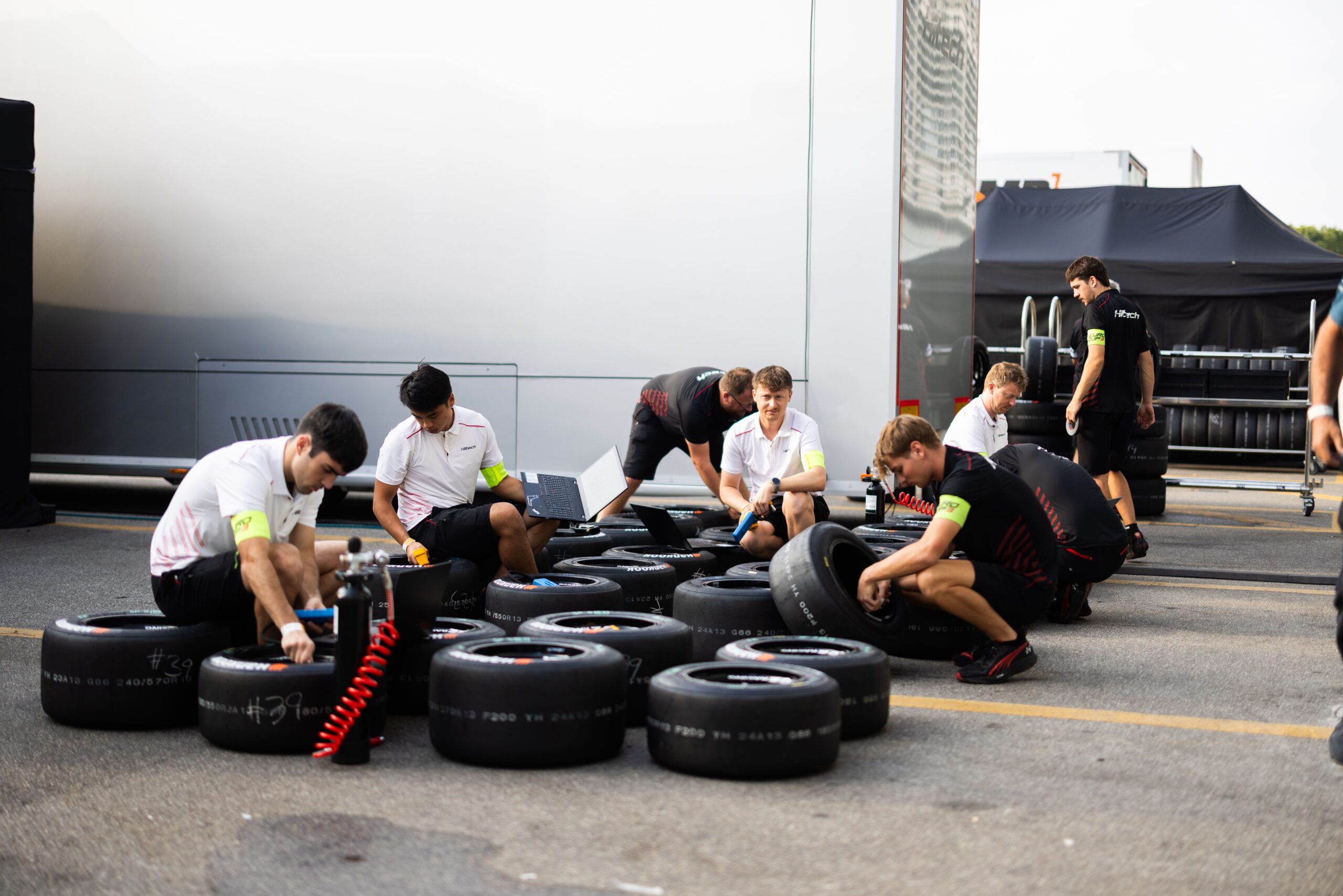
When people talk about a junior single-seater championship, the conversation almost always starts and ends with the drivers. But walk down the paddock on a Eurocup-3 race weekend and the drivers are only part of the story. Behind every car on the grid is a small, tightly-knit technical crew — race engineers reading data between sessions, mechanics turning the car around in minutes. For a growing number of young engineers and technicians, series like Eurocup-3 are where a motorsport career actually begins.
As EPIC Championships heads into a new era for the series — a fresh Dallara 326 chassis, a 270hp Toyota TGE33 turbo engine developed by TOM’S, and Hankook tyres for the 2026 season — it’s worth looking past the results sheet at the people making that machinery perform. This is how junior categories like Eurocup-3 are quietly becoming one of the most important training grounds in European motorsport.
The Crew Behind the Car
A single-seater doesn’t run itself, and at this level, technical teams are lean enough that everyone’s role matters. A typical trackside crew includes:
- Race engineers, who translate driver feedback and telemetry into concrete setup changes — suspension, aero balance, engine mapping — and manage the car’s performance across a race weekend.
- Data engineers and analysts, who dig into lap-by-lap telemetry to find the tenths of a second that separate a podium from a mid-pack finish.
- Mechanics, who build, repair and turn the car around between sessions, often against the clock.
What makes junior categories like Eurocup-3 such valuable training ground is scale. In a smaller team, a young engineer or mechanic doesn’t sit three layers removed from the decision-making — they’re in it, race weekend after race weekend, learning to solve problems in real time with real consequences. It’s a different kind of education than a classroom, and it’s one that top-tier series simply can’t offer to newcomers in the same way.
How Young Engineers and Technicians Actually Get In
For anyone dreaming of a career on the other side of the pit wall, the routes in are more accessible than the glamour of race day might suggest. Broadly, there are two paths:
The degree route. A foundation degree, HND or full degree in motorsport, automotive, mechanical, aeronautical or electrical/electronic engineering is the most common entry point for race and data engineers.
The apprenticeship route. For technicians and mechanics, structured apprenticeships — from Engineering Technician up to degree-apprenticeship level — offer a hands-on alternative that many teams value just as highly as a university qualification. Volunteering with grassroots motorsport organisations is another well-worn way to get a foot in the paddock door and start building the contacts that lead to a paid role.
Beyond formal education, the FIA runs initiatives aimed squarely at opening up these career paths — including its “Engineer Your Career” programme (published in English, French and Spanish) and global schemes like F1 in Schools, which introduces students to motorsport engineering through STEM and CAD-CAM projects long before they ever set foot in a real paddock.
Why It Matters for the Sport
Every driver who steps out of Eurocup-3 into FIA Formula 3 or beyond takes their learning curve with them — but so does every engineer and technician who cuts their teeth on a Eurocup-3 crew. The series’ role in developing technical talent doesn’t make headlines the way a race win does, but it’s just as central to what keeps European motorsport supplied with the people who make the sport run: the engineers reading the data, the mechanics working against the clock, and the technicians who understand a tyre better than anyone on the grid. As Eurocup-3 heads into its second half of the 2026 season with new machinery and a bigger European footprint, it’s not just building better racing. It’s building the next generation of the people behind it.