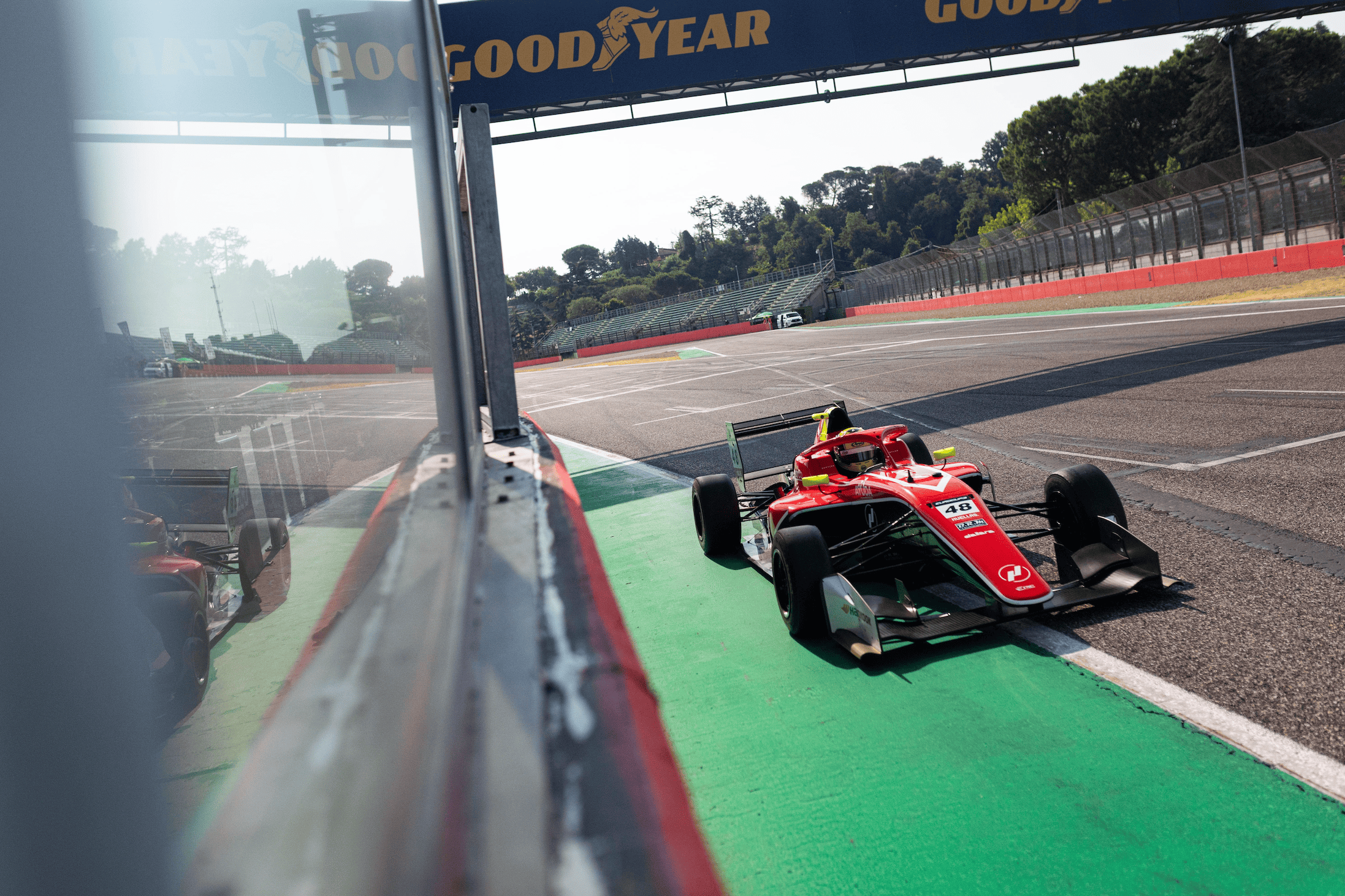
Ask any paddock veteran what separates a good junior driver from a great one, and speed will rarely be the first answer. Racecraft, adaptability, and the ability to adjust when the plan changes mid-weekend matter just as much. That’s exactly what makes Eurocup-3’s race weekend structure stand out: it isn’t the same every round. Depending on where the championship lands on the calendar, drivers face one of two different formats — and knowing which is which changes how you watch the racing.
The Standard Weekend: Two Qualifying Sessions, Two Races
Most Eurocup-3 rounds follow a compact, demanding schedule built around pure pace. The weekend opens with two 40-minute practice sessions, followed by two separate qualifying sessions — the first setting the grid for Race 1, the second setting the grid for Race 2. Each race runs 30 minutes plus one lap.
There’s no reverse grid in this format. Both races reward the fastest lap of their respective qualifying session, which means a driver has to be quick not once, but twice in the same weekend, often as track conditions and rubber-in evolve from Saturday to Sunday. Points run deep — 25 down to 1 across the top ten finishers in each race — plus a bonus point for pole in each qualifying session and one for the fastest lap of each race. That depth of scoring means the midfield battle matters just as much as the fight at the front.
The ELMS Weekends: Where the Sprint Race Changes Everything
A handful of rounds each season run alongside the European Le Mans Series, sharing the stage with top-tier endurance racing in front of a bigger crowd. These weekends don’t just add prestige — they change the format itself.
On ELMS-support rounds, a sprint race is slotted in between Race 1 and Race 2. Unlike the two main races, the sprint’s grid is reversed, built from the fastest lap times set by the leading finishers of Race 1. A driver who dominated Race 1 can find themselves starting from further back in the sprint, while a driver who had a quieter first race gets a genuine shot at the front. The sprint itself is shorter — around 20 minutes plus one lap — but the racing tends to be some of the tightest of the season, since the field is reshuffled and everyone is fighting for track position rather than defending a gap built in qualifying.
Why the Variation Matters
This isn’t a minor scheduling quirk. It’s a deliberate way of testing drivers under different conditions across a single season. The standard weekends reward outright qualifying pace, twice per round, with no shortcuts. The ELMS weekends add a layer of racecraft under pressure — starting out of position, reading a reshuffled grid, and converting limited laps into a result.
For teams and scouts watching the championship for future talent, that combination is valuable. A driver who can only win from the front of a clean qualifying-order race tells you less than one who can also fight through a reversed sprint grid and come out ahead. Eurocup-3’s shifting format surfaces both kinds of evidence over the course of a season, rather than testing the same skill set round after round.
For fans, it means no two rounds feel identical. A standalone weekend is a straightforward test of speed and consistency across two races; an ELMS weekend adds an unpredictable middle act that can flip a driver’s afternoon — and sometimes the championship battle — on its head.
The Format Isn’t Always Tied to ELMS
Here’s where it gets even more interesting: sharing the bill with ELMS doesn’t automatically mean a sprint race is on the schedule, and running solo doesn’t rule one out. Silverstone, despite being an ELMS-support round, runs the standard two-race format with no sprint. Jerez, on the other hand, is a standalone Eurocup-3 weekend — no ELMS alongside it — and still includes a sprint race.
That’s worth flagging because it means fans and teams can’t simply assume the format from the entry list alone. Each round’s schedule has to be checked individually, and that unpredictability is part of what keeps a season of eight rounds from ever settling into a routine.
More Than Just Speed
Understanding Eurocup-3’s format means understanding that the championship is testing more than lap time. Across a season that mixes standard weekends with ELMS-support rounds, drivers have to prove they can win on raw pace and win from a compromised grid — and that range is exactly what separates a driver ready for the next step in their career from one who simply looks quick on a good day.